HERMES: Healing Effects of Role Models for Empowerment and Solidarity 

Can narratives about role models from disadvantaged groups — who overcome social disadvantages and defy systemic discrimination through acts of resistance — drive social change?

The HERMES project (Healing Effects of Role Models for Empowerment and Solidarity) answers this question by examining two pathways to social change:

  • Among advantaged groups: perceptions of disadvantaged groups' empowerment and solidarity towards those groups.
  • Within disadvantaged groups: expressed solidarity and experienced empowerment.

To do this, HERMES employs:

Online experiments
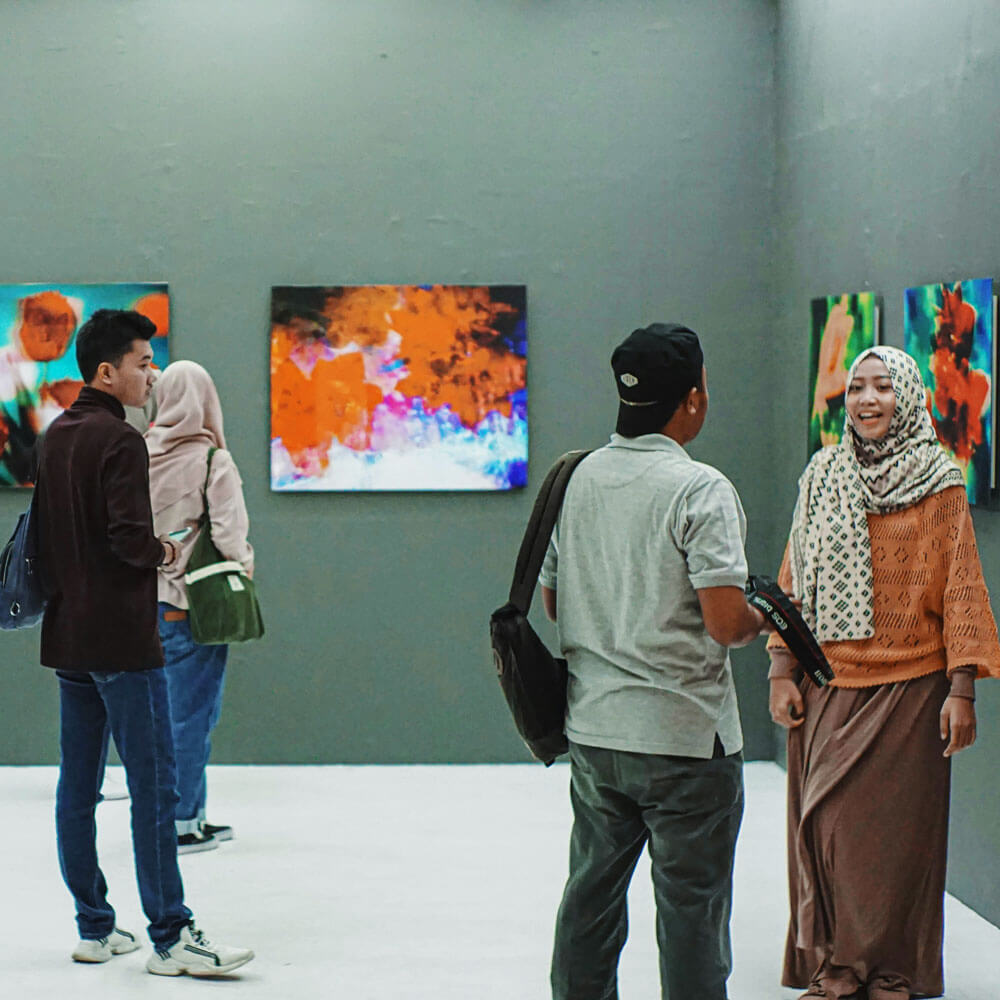
Field experiments in exhibition settings

Virtual Reality (VR) interventions

The project integrates social science, communication, arts, activism, and digital innovation. Findings will enhance the effectiveness of interventions for meaningful social change.

Aims

HERMES seeks to understand the effect of disadvantaged role models in promoting social change with and within less privileged groups.

Our goals are:

To understand if, why, and when narratives featuring these role models influence:

  • Group empowerment perceptions
  • Support for empowering initiatives, such as interpersonal solidarity, policy support or engagement in real empowering actions.
  1. To craft innovative tools for social interventions.
  2. To measure real solidarity behaviour.

Funding

This project has been funded by the Spanish Ministry of Science and Universities, with the National Grant “HERMES: Healing Effects of Role Models for Empowerment and Solidarity” (PID2023-151315OA-100) for the Research Groups (‘Culture, Cognition, and Emotion’ Consolidated Group: IT1598-22).
This project has been funded by the Spanish Ministry of Science and Universities, with the National Grant

What if empowered migrants became the exemplars we look up to?

HERMES focuses on narratives featuring migrant role models — people who have faced discrimination and structural barriers and responded with collective or individual empowerment rather than resignation.

These exemplars are not presented as exceptional individuals who have beaten the odds alone, but as people embedded in communities of solidarity, whose stories reflect shared struggles and collective agency.

We work with organizations such as SOS Racism and Refugee Today to ensure these role model narratives are grounded in real experiences — covering themes such as employment discrimination, precarious working conditions, access to housing, and social exclusion — whether organizing a workers' strike, fighting for fair housing, or demanding recognition in the workplace.

Who gets to tell the migrant story?

Migrant people are often represented in the media through frames of crisis, insecurity, or victimhood, reinforcing images that feed threat perceptions, fear, pity, and paternalism.

These dominant narratives erase the complexity, agency, and resilience of migrant communities — and they have real consequences for how societies respond to migration.

What is missing are counter-narrative role models: people whose stories of resistance and empowerment challenge the dominant script and offer a different image of what it means to be a migrant.

When the story changes, does the world change with it?

Can role model narratives of migrant empowerment counter dominant media framings by evoking emotions such as admiration or moral anger? Can these exemplars of resistance inspire solidarity — both within and beyond migrant communities — and mobilize people toward meaningful social change?

How do we put it to the test?

We use a combination of nation-wide online experiments and exhibition-based and virtual reality-based field experiments.

In these laboratory or field experiments, participants are randomly exposed to individual or collective empowerment role model narratives paired with portrait images of migrants — including validated refugee photographs provided by our partners like Refugee Today or Red Acoge.

We measure emotional responses and solidarity responses such as social support intentions, support for policies empowering migrants, and real prosocial behavior by means of writing a supportive message to be shared with migrant communities.

Migrant Women in the Household and Care Sector: Who Cares for the Carers?

Who holds the world together — and at what cost? Migrant household and care workers are one of the most invisibilized groups in contemporary societies, shaped by multiple overlapping axes of oppression: migration status, gender, class, racialization, and coloniality.

The concept of the global care chain captures a painful reality — women from the Global South who leave their own children in the care of others to look after the children and elderly of wealthier nations.

Their labor sustains societies, yet their rights, dignity, and struggles remain largely invisible. And crucially, their voices — their stories of empowerment and resistance — rarely reach the people who benefit most from their work.

What does it look like when the invisible organize — and become role models? HERMES focuses on narratives featuring migrant household and care workers as empowerment exemplars — women who collectively organize, speak out, and fight for dignified living and working conditions.

These are not stories of passive endurance or individual gratitude, but of collective solidarity and shared agency. Working closely with civil society organizations, we collect and adapt real-life accounts of collective empowerment and resistance, centering the voices of the women at the heart of this struggle as role models for social change.

When a woman who cares for others dares to organize, does that story make others care back? Can role model narratives of collective empowerment among migrant domestic workers generate mobilizing emotions such as admiration, moral anger, or hope? And can these emotions build genuine solidarity — translating into support for labor rights, dignified working conditions, and the broader struggle for recognition and justice?

How do we put it to the test? We conduct nation-wide online experiments in Spain, exposing participants to one of three narrative conditions: collective empowerment exemplars, gratitude-based acceptance exemplars, or a neutral control. We

Role model narratives were developed from real accounts gathered in collaboration with a civil society organization SOS Racismo, and paired with validated photographs of women of Latin American background.

We measure solidarity-related outcomes including social support intentions, support for labor rights-enhancing practices, and allied collective action intentions — as well as potential backlash effects through a measure of victimhood-based delegitimization.

What happens when a community's land, language, and future are under threat? Indigenous communities around the world — from the Amazon rainforest to Andean highlands, from Arctic tundra to Pacific islands — have long faced dispossession, discrimination, and the erasure of their cultures, languages, and ways of life.

Despite centuries of resistance, their struggles remain largely invisible in mainstream narratives, and their communities are frequently portrayed as passive victims of historical injustice rather than as active agents of change.

What is missing are role models — stories of collective empowerment that make visible the agency, solidarity, and resistance at the heart of indigenous community life.

What does collective resistance look like when communities become their own exemplars? HERMES focuses on narratives in which indigenous communities act as collective empowerment exemplars — communities that have organized, resisted, and achieved change together in the face of structural injustice.

Whether defending rivers from illegal mining, reclaiming bilingual education, demanding political representation, or protecting food sovereignty, these role model narratives foreground collective solidarity and shared agency. They are grounded in real actions carried out by indigenous communities and documented by NGOs and civil society organizations.

When a community in the Amazon defends its river — does that story inspire solidarity beyond its borders? Can role model narratives of indigenous collective empowerment generate admiration and moral emotions in wider audiences? And can these emotions build solidarity that crosses community boundaries — translating into genuine support for indigenous rights, self-determination, and social change?

How do we put it to the test? We conduct nation-wide online experiments in Peru, using nine community-based role model narratives drawn from real collective actions by Andean and Amazonian indigenous communities — covering topics such as water contamination, deforestation, food security, and political representation.

Each narrative exists in three versions: collective empowerment exemplar, resignation exemplar, and neutral control.

We measure perceived group empowerment, solidarity with indigenous communities, support for empowering initiatives, and prosocial behavior, and explore whether solidarity with one group can transfer to support for other disadvantaged groups.

Voices from the Land: Indigenous Communities in Action

Playing by their Own Rules: Women and Gender Non-Conforming Musicians

Whose voices get amplified — and whose get silenced? Music is a heavily male-dominated sector — like many others. Women and gender non-conforming people in the music industry face structural barriers at every level: access to stages, studios, and decision-making spaces; underrepresentation in positions of creative and economic power; and the systematic devaluation of their work.

These barriers are compounded for those whose identities intersect with race, class, or sexuality. Yet these are also the people who have built their own spaces, created their own networks, and turned their exclusion into fuel for collective empowerment.

What if the musicians who broke barriers became role models for change and gender justice? In this strand of the project, we interview women and gender-diverse people in the music world — musicians, singer-songwriters, producers, composers, DJs, and more — from both institutionalized artistic spaces and community-based initiatives, everyday activism, and self-managed collective projects.

These individuals and collectives are treated as empowerment exemplars: role models whose stories of resistance, solidarity, and collective agency have the potential to inspire others and drive social change. The aim is to listen to, amplify, and share these narratives — and to rigorously assess their impact on broader audiences.

When a woman takes the stage in a world that wasn't built for her — what does her story do to those who hear it? What structural barriers have these role models encountered? What strategies of resistance and collective empowerment have they developed? What role have solidarity networks and community-based work played in their trajectories? And can their stories generate the emotions and attitudes needed to inspire empowerment and solidarity in others?

How do we put it to the test? This work stream combines qualitative interviews with field experiments. We collect first-hand role model narratives through in-depth interviews and test their impact in real-world settings — including exhibition-based experiments at events such as music festivals.

Participants encounter empowerment narrative exhibitions in public spaces and respond via QR-linked surveys, with the option to donate to solidarity initiatives — allowing us to measure both attitudinal change and real solidarity behavior.

What does stigma actually do to a person's place in the world? People living with mental health diagnoses face not only the challenges of their condition, but a pervasive and often invisible wall of stigma, discrimination, and social exclusion. From the workplace to housing, from healthcare to everyday social interactions, structural barriers limit their participation in society — not because of their diagnosis, but because of how society responds to it.

Dominant narratives tend to portray people with mental health diagnoses as vulnerable, unpredictable, or defined entirely by their condition — leaving no room for stories of agency, resistance, or empowerment.

What if people living with mental disorders became their own role models — together? HERMES focuses on narratives featuring people with mental health diagnoses as empowerment exemplars — individuals and communities who refuse to be defined by stigma and who have organized, spoken out, and created their own spaces of care, mutual support, and collective advocacy.

These role model narratives span a wide range of real-life scenarios: cooperative work projects, tenants' unions, community radio, storytelling workshops, stand-up open mics, civic participation, book clubs, and collective anti-stigma campaigns.

Stigma thrives in silence — but what happens when people break it together? Can role model narratives of collective and individual empowerment — in which people with mental health diagnoses challenge discrimination and reclaim their voice — generate admiration and moral emotions in broader audiences? And does collective empowerment, rooted in solidarity and shared agency, have a stronger power to reduce stigma and build support for mental health rights than individual empowerment alone?

How do we put it to the test? We conduct nation-wide online experiments using real-life scenarios, each developed in both a collective empowerment exemplar and an individual empowerment exemplar version, plus a neutral control. This three-condition design allows us to directly compare the solidarity-building power of collective versus individual empowerment role models — a key theoretical question of the HERMES project.

We measure identification with people with mental health diagnoses, social support intentions, perceived group empowerment, support for empowering policies, and prosocial behavior, and explore the mediating roles of admiration, compassion, moral anger, and guilt.

More Than a Label: Individuals Living with Mental Disorders
Contact us

For general inquiries about the HERMES project, collaborations, or media requests, please reach out to us using the details below.

Principal Investigator: Magdalena Bobowik